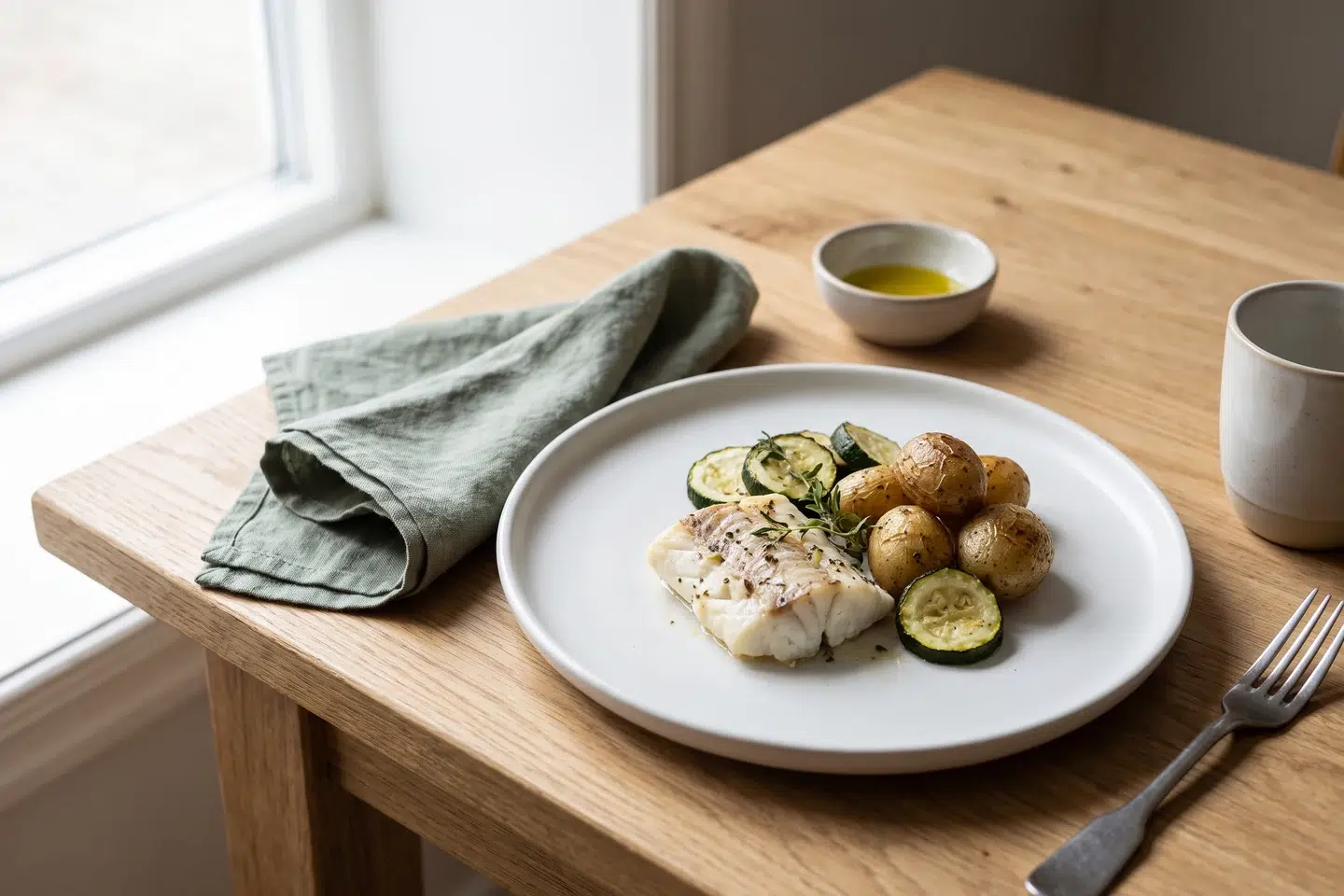
Did you know: consuming 226 grams of marine fish each week reduces the risk of death from heart disease by 36%?
Taking these statistics into account, we can say yes Sea fish saves lives.
In addition, it is extremely nutritious for our mind and body.
Eating 250-300 grams of marine fish per week during pregnancy can improve your baby's IQ, cognitive development and eye health.
Older adults who regularly consume seafood they live an average of 2.2 years longer.
If you're trying to lose weight or improve your diet, you should probably eat more fish. Fish should be eaten at least 2 times a week!
However, the nutritional value of fish varies considerably. Keep in mind that the type of fish you choose makes a big difference. There are some types that should be avoided, and other types that are better for your health.
In the rest of the text, we will talk about sea fish and its benefits for you and your family. Keep reading and find out everything you need to know to be healthier and at the same time enjoy an enriched meal.
How does sea fish affect your body?
Marine fish supplies your body with essential nutrients.
These nutrients include vitamins A, B and D, as well as omega-3 fatty acids. Fish meat is also rich in calcium and phosphorus and is an excellent source of minerals such as iron, zinc, iodine, magnesium, selenium and potassium.
Vitamin A protects eyesight and strengthens the immune system, which is extremely important in the age of a global pandemic. B vitamin complex affects energy, metabolism and concentration.
Marine fish is one of the few food sources of vitamin D, which promotes healthy bone growth, calcium absorption, and increases immune system efficiency and cell growth. Normally, vitamin D is absorbed through sunlight, through the skin.
Our body does not produce omega-3 fatty acids, so we have to take them in with the food we eat.
Omega-3 fatty acids are found in all types of fish, but are particularly rich in fish such as salmon, trout, sardines, swordfish, mackerel, tuna and swordfish.
They are also present in seafood, and they have countless health benefits:
- They help maintain a healthy heart by lowering blood pressure and reducing the risk of sudden death, heart attack, abnormal heart rhythm and stroke
- They help healthy brain function and vision and nerve development in babies during pregnancy
- They can reduce the risk of depression, Alzheimer's disease and dementia
- They can reduce the chances of developing diabetes and the metabolic syndrome that precedes it
- They can prevent inflammation and reduce the risk of arthritis
Seafood makes you smarter.
People who eat fish often have 14% larger hippocampus in the brain - a large center for memory and learning.
Seafood diet during pregnancy and childhood
Pregnancy increases the need for almost all nutrients.
Some of them are most abundant in fish, such as selenium and iodine, and omega-3 fatty acids, which can be found almost exclusively in fish. These nutrients, along with other fatty acids, are critical for the development of the baby's organs, especially the brain and eyes.
Eating foods rich in omega-3 fatty acids is especially important in the last three months of pregnancy and during the first two years of the child while the brain is developing. After that, brain and eye growth slows down, but the need for these fatty acids continues throughout life.
Babies who get enough of these fatty acids from breast milk, or formula with added fatty acids, may perform better on developmental and visual tests, compared to babies who don't get enough of this nutrient through their diet.
They also have a more mature nervous system.
Germs need very little (or none) light and nutrients to grow.
Some research suggests that children who regularly consume fish meat have better learning ability and are less likely to develop learning problems or behavioral abnormalities.
Marine fish and its nutritional value
See the following nutritional information for 150 grams of salmon:
- Calories: 280
- Fat: 12.5 gr
- Sodium: 86 mg
- Carbohydrates: 0 gr
- Fiber: 0 gr
- Sugars: 0 gr
- Protein: 39.2 grams
Comparing fish calories can be difficult because the way you prepare fish can significantly change the nutritional value. However, you can compare the calories of raw fish.
Calories and nutrition of fish are listed for a 100 gram serving:
- Halibut (raw with skin): 116 calories, 3 grams fat, 0 grams carbs, 20 grams protein
- Tuna (yellowfin, fresh, raw): 109 calories, less than one gram of fat, 0 grams of carbohydrates, 24 grams of protein
- Cod (Atlantic, raw): 82 calories, 0.7 grams fat, 0 grams carbohydrates, 18 grams protein
- Mahimahi (raw): 85 calories, 0.7 grams fat, 0 grams carbs, 18.5 grams protein
- Perch (Atlantic, raw): 79 calories, 1.4 grams fat, 0 grams carbs, 15 grams protein
Believe it or not, research shows that fish is the best for weight loss and health improvement oily fish. But not just any oily fish. Certain types of fish contain an essential fatty acid called omega-3, which we discussed above.
If you intend to make a meal for weight loss, why not choose fish that also provides benefits for your health? Eating more fatty fish may mean you take in more calories in one meal, but if you eat fish in moderation and use good cooking methods to prepare the food, you'll benefit in the long run.
Sea fish and its storage
Experts suggest you buy the freshest catch available. It helps if you know what questions to ask the seller when buying fish, and also yourself.
Here they are.
When was she caught? The best quality fish is always fresh. Fish may remain edible for five days after being caught, but may not taste as fresh.
How is it stored? The way the fish is stored and delivered will have an effect on the taste itself. Fish should be cooled immediately after catch and kept cold during delivery.
What does it look like? What does it smell like? If the fish has a bad smell, it is probably not fresh. Fresh fish should smell like sea water.
If you are buying fish fillets, look for a moist texture with clean cut edges, and if the fish is whole, look for clear eyes and a firm texture.
What is the best way to prepare this fish? Sometimes the grocer is the best source for great, easy and healthy fish recipes.
Tip: Use the fresh fish within two days or put it in the freezer. When you are ready to use the frozen fish, Defrost it in the refrigerator. (never at room temperature).
Sea fish that are most often found on tables around the world
When most people see fish, they only see food.
However, as we could read in the text above, sea fish differ significantly in their nutritional values, therefore we will list the most popular sea fish that are most often found on the tables of many families around the world.
Salmon
Salmon is a fish native to the North Atlantic. If we know that there is a type of marine fish that lives in a certain environment and cannot be found anywhere else, it means that this type of fish is certainly more expensive than usual.
It is an interesting fact that salmon one of the most nutritious foods on the planet!
This popular seafood is not only packed with nutrients, but may also reduce certain risk factors for several chronic diseases.
Salmon is widely available, very healthy and very tasty, so it is an ideal food for you and your family.
Swordfish
The swordfish is a large deep-sea predator that is consumed by humans around the world.
As we said before, it recommends that we eat at least two servings of fish per week, and swordfish might be the best option for you and your family.
Swordfish has a distinctive nutritional profile which has a very positive effect on health.
Swordfish is an excellent source of selenium, a micronutrient that offers important benefits in the fight against cancer and heart health. It is rich in protein and full of niacin, vitamin B12, zinc and Omega-3.
Best of all – it is low in fat and calories.
Sea bream
Common throughout the Mediterranean Sea, sea bream is prized in Mediterranean cuisine and by European chefs.
The name "gilded head" comes from the golden stripe between the eyes. It has white, fluffy flesh with silver scales, firm texture and medium sweet taste.
Although it is not very attractive in appearance, sea bream is considered one of the tastiest fish in the world!
History testifies to this. - the ancient Romans preferred to choose this type of sea fish for their meal.
Sea bass
Sea bass, humpback, black sea bass... this fish has many names, and it is found from the coast of Maine all the way to northeast Florida and the Gulf of Mexico.
The body of sea bass is blue, black, smoky gray and dark brown in color, with white and extremely tasty meat. The tail is straight-edged or rounded. Sea bass are believed to live up to 20 years. Bass prey on crabs, small fish, shrimp, squid, clams and razor clams.
The excellent source of protein in sea bass helps your immunity stay strong.
They also contain an unusually high amount of omega-3 fatty acids that will help fight inflammation and keep you healthy.
If you are looking for an excellent source of protein to help you stay healthy and avoid future health complications, adding sea bass to your diet will help you achieve that goal.
Toothy
One of the most sought-after fish of the Adriatic Sea, the toothfish gets its name from its prominent fangs.
It can grow up to 1 meter and reach a weight of 16 kg.
The toothfish has a strong and firm body, with slightly flat sides. The caudal fins are strong and well built - the sign of a good swimmer and a deadly predator. A toothpick on your table means a handful of health benefits for the overall health of the body.
Tuna
If fish were like cars, tuna would be the Ferrari of the ocean – sleek, powerful and built for speed.
Their torpedo-shaped bodies simplify their movement through the water, and special swimming muscles allow them to cruise the seas and oceans with great efficiency.
Tuna is a type of marine fish whose habitats extend from the Atlantic Ocean all the way to Indonesia.
Tuna is one of the most popular sea fish in the world. Apart from the abundance of nutrients and meaty taste, tuna is also extremely nutritious, like all other sea fish.
Hake
Hake are members of the cod family and they can be found at depths of over 1,000 meters. In the family Hakeidae A total of 13 species of hake are known, so although the taste and texture may differ depending on the species.
All hake have a milder taste, softer texture and smaller scales than cod.
Cod
Cod is a voracious fish - it feeds mainly on other fish and various invertebrates.
It is extremely valuable for its healthy meat, liver oil and other products that can be made from cod.
Cod up to 11 kg is usually caught, but it can reach maximum length and weight greater than 1.8 m and 91 kg.
Is saltwater fish for you?
If you want to include sea fish in your diet, the Fit Pro Team prepares all-day meals for you and delivers them to your home address, whether you want to lose weight or detox your body.
See an example of the weekly menu at this link, call us, tell us what your goal is in the coming period and we will put together a diet tailored to your goals!