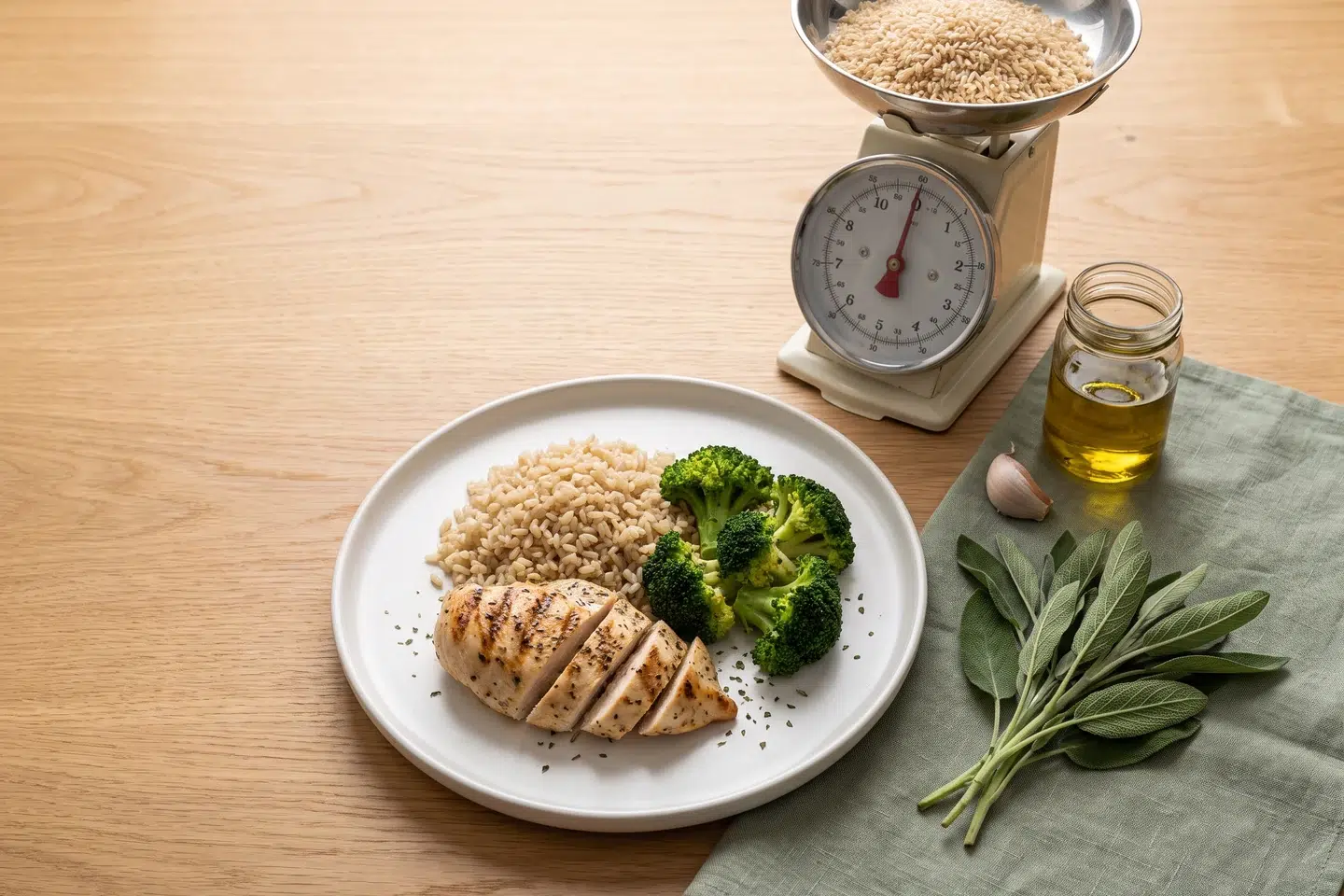
What is the glycemic index?
The glycemic index is a scale that ranks the number of carbohydrates in food from 0 to 100 and thus shows how quickly a certain food will cause a spike in blood sugar. This scale was created in the early 1980s by Dr. David Jenkins, a professor from Canada.
The rate at which food raises blood sugar is ranked relative to the absorption of 50 grams of pure glucose. Pure glucose is used as a reference food and has a glycemic index (GI) of 100.
The glycemic index is divided into 3 groups:
- Low: 55 or less
- Medium: 56-69
- Tall: 70 or more
Food with a low glycemic index should be eaten more often. This food is slowly digested and absorbed by the body, which causes a slow and lower rise in blood sugar.
Only foods that have carbohydrates have a glycemic index. Therefore, foods without carbohydrates do not have a GI value. For example: beef, chicken, fish, eggs, herbs, spices.
Conclusion:
- The glycemic index (GI) is a scale for ranking the amount of carbohydrates in food according to how quickly they cause a spike in blood sugar
- The GI scale was created in the 1980s by Dr. David Jenkins.
What factors affect the GI value of food?
Many factors affect the GI of a food or meal. For example:
Type of sugar in food - There is a misconception that all sugars have a high glycemic index. The GI of sugars ranges from 23 for fructose to 105 for maltose. So the glycemic index of food depends on what type of sugar it contains.
Starch structure - Starch is a carbohydrate that has 2 molecules: amylose and amylopectin. Amylose is difficult to digest, while amylopectin is easy to digest. Food with a high level of amylose therefore has a lower glycemic index.
Degree of refinement of carbohydrates - Some refining methods such as grinding and rolling have a negative effect on amylose and amylopectin molecules, and this raises the GI of food. Generally speaking, the more processed a food is, the higher the glycemic index.
Nutrient composition - Adding protein or fat to a meal can slow digestion and reduce the body's glycemic response to a particular meal.
Cooking method - Preparation and cooking techniques can affect the glycemic index. The longer a food is cooked, the faster the body will digest and absorb sugars, so the GI will be higher.
Freshness of food - Unripe fruit has complex carbohydrates that break down into sugars as the fruit ripens. The riper the fruit, the higher the glycemic index. For example, an unripe banana has a glycemic index of 30 and an overripe banana has a glycemic index of 48.
Conclusion:
- The glycemic index of a food or meal depends on a number of factors, including the type of sugar in the food, the structure of the starch, the method of preparation and the level of freshness of the food.
Glycemic index and level of carbohydrates
The rate at which food raises blood sugar depends on 3 things: the type of carbohydrates, the composition of nutrients and the amount eaten.
However, the glycemic index is a relative measure that does not take into account the amount of food someone has eaten. For this reason, it is often criticized as a ranking scale.
To solve this problem, the glycemic load was devised.
Glycemic load measures how carbohydrates affect blood sugar and takes into account the type of food (glycemic index) and the amount of food (grams per serving).
Glycemic load has 3 groups:
Low: 10 or less
Medium: 11-19
High: 20 or more
The glycemic index is still the most important factor to consider when following a low glycemic index diet.
But experts still recommend taking care of the glycemic load - its value should be below 100 every day.
The easiest way to keep your glycemic load under 100 is to eat low-glycemic foods in moderation whenever possible.
Conclusion:
- Glycemic load is a measure of the type and amount of carbohydrates we eat. When following a diet with a low glycemic index, the glycemic load should be maintained below 100.
Low glycemic index and diabetes
Diabetes is a complex disease that affects millions of people worldwide. People with diabetes cannot process sugar efficiently and therefore have a hard time maintaining a healthy amount of sugar in their blood.
However, controlling sugar on a daily basis helps them prevent complications including heart disease, stroke and nerve or nerve damage.
Several studies suggest that a low-GI diet can lower blood sugar levels in people with diabetes.
One 2019 review of 54 studies concluded that low GI reduced hemoglobin A1C1 (a long-term marker for blood sugar control), body weight, and blood sugar levels in people with diabetes and prediabetes.
Also, some studies have linked a high-GI diet to a higher risk of type 2 diabetes. People who follow a high-glycemic index diet have been found to have an even 33% greater chance of developing type 2 diabetes than people who eat low-glycemic index foods.
One study showed that for every 5 units of the glycemic index, there is a jump in 8% for the development of type 2 diabetes.
A low-glycemic diet may improve pregnancy outcomes in women who have gestational diabetes, a form of diabetes that occurs during pregnancy.
Also, the low glycemic index reduces the risk of macrosomia for 73%. It is a condition where newborns weigh more than 4 kilograms at birth and can cause numerous short-term and long-term complications for mother and baby.
Conclusion:
- A diet with a low glycemic index lowers blood sugar in diabetics. People who follow a high GI diet have a higher risk of developing type 2 diabetes.
Additional benefits of a low GI diet
Studies have shown that a low glycemic index diet has other health benefits:
Decrease in cholesterol levels - One study showed that a low glycemic index diet reduced total cholesterol by 9.6% and LDL ("bad") cholesterol by 8.6%.
LDL cholesterol increases the chance of heart disease and stroke.
Weight loss - There is some evidence that low GI helps with weight loss. However, more research is needed to determine whether low GI is effective for long-term weight loss.
Lower risk of cancer – Certain studies suggest that people whose diets are high in GI have a higher chance of certain types of cancer (endometrial, colon and breast cancer).
Lower risk of heart disease - Recent studies have strongly linked high GI and high glycemic load to heart disease risk.
Conclusion:
- A low GI diet is associated with weight loss and lower cholesterol. On the other hand, a diet with a high GI has been associated with a risk for some types of cancer.
Which foods have a low glycemic index?
There is no need to count calories or the amount of protein, fat or carbohydrates if you follow a low glycemic index diet.
Instead, a low GI diet is based on eliminating high GI foods and consuming alternative foods.
There are plenty of healthy and nutritious foods that have a low glycemic index.
For example:
- Bread: integral, rye, with several types of cereals
- Breakfast cereals: oats, bran
- Fruit: apples, strawberries, apricots, peaches, plums, pears, kiwi, tomatoes, etc.
- Vegetables: carrots, broccoli, cauliflower, celery, zucchini, etc.
- Starchy vegetables: sweet potato, corn, yam
- Legumes: lentils, chickpeas, baked beans
- Rice: basmati, long grain rice, brown rice
- Cereals: quinoa, barley, buckwheat, semolina
- Dairy products and substitutes for dairy products: Milk, cheese, yogurt, coconut milk, soy milk, almond milk
The following examples of foods are low in carbohydrates or have no carbohydrates. For this reason, this food has no GI value and can be consumed as part of a low GI diet:
- Fish and seafood: Salmon, tuna, sardines, trout and prawns
- Other products of animal origin: including beef, chicken, pork, lamb and eggs
- Nuts: almonds, pistachios, walnuts, cashews and macadamia nuts
- Fats and oils: olive oil, butter, avocado
- Herbs and spices: garlic, basil, dill, salt, pepper
Foods to avoid on a low GI diet
No food is strictly prohibited on this diet.
However, try to replace high glycemic index foods with their low GI alternatives.
The following foods should be avoided:
- Bread: white bread, buns, naan bread, Turkish bread, French baguette, Lebanese bread
- Cereals for breakfast with a lot of sugar
- Starchy vegetables: red potatoes, instant mashed potatoes
- Pasta and pasta: corn paste and instant noodles
- Rice: Jasmine, Arborio
- Dairy substitutes: rice milk and oat milk
- Fruit: watermelon
- Salty snacks: rice crackers, rice cakes, pretzels, corn chips
- Cakes and other sweets: donuts, cupcakes, cookies, waffles, cakes
- Other: jelly candies, licorice candies
Conclusion:
- Limit your intake of foods with a high glycemic index and choose foods that have a low GI.
Healthy snacks with a low glycemic index
If you get hungry between meals, try the following snacks:
- A handful of unsalted nuts
- A piece of fruit with nut butter
- Carrot pieces with hummus
- Berries or grapes with a few cubes of cheese
- Greek yogurt with almonds
- Apple slices with almond butter or peanut butter
- Hard-boiled egg
Disadvantages of a low glycemic index diet
- This diet does not provide all nutrients to the body. It is important to eat fats, proteins, sugar and fiber, regardless of their glycemic index.
- The glycemic index measures the effect of a food on blood sugar levels. But most meals involve a combination of foods so it is difficult to predict the GI value.
- The glycemic index does not take into account the amount of carbohydrates you eat. And that is an important factor for the spike in blood sugar.
In short
A diet with a low glycemic index means choosing a healthier alternative (e.g. swapping white rice for brown rice). This diet has various health benefits: it lowers sugar levels, helps with weight loss, reduces the risk of heart disease and type 2 diabetes.
But the low GI diet has its drawbacks - one of them is that it does not include all the nutrients the body needs. So we can conclude that it is most important to follow a healthy and balanced diet rich in unprocessed foods regardless of the glycemic index. For this reason, Fitt Pro Team offers you 2 nutritional regimes: ByeBye Weight if you want to lose weight in a healthy and natural way, as well Hello Balance if you want to eat a balanced and healthy diet.